What is an FLHA? A Practical Guide for Construction Teams
What Is a Field-Level Hazard Assessment (FLHA)? A Practical Guide for Construction Teams
Before work begins on a construction site, workers need to understand what hazards they could face and how to protect themselves and others. A Field-Level Hazard Assessment (FLHA) helps make that process part of the daily routine.
Whether your team works in construction, landscaping, maintenance, or another hands-on industry, an FLHA provides a structured way to identify hazards, assess risks, and determine the controls needed before starting a task.
But what exactly is an FLHA, when should one be completed, and what should it include? Here's what your team needs to know.
What Is a Field-Level Hazard Assessment (FLHA)?
A Field-Level Hazard Assessment (FLHA) is a site-specific safety assessment completed at or near the work area before a task begins. It helps workers identify potential hazards associated with their work, evaluate the risks, and determine appropriate safety controls.
An FLHA is designed to reflect the conditions workers are actually facing in the field. Unlike a general safety policy or a broad workplace hazard assessment, it focuses on the job, location, equipment, people, and conditions involved in the work being performed.
For example, a landscaping crew preparing to operate equipment near a public walkway might identify pedestrian traffic, uneven ground, moving machinery, and flying debris as potential hazards. The team can then determine the controls needed to manage those risks before work starts.
The goal is simple: identify hazards before they cause harm, and make sure everyone understands how to work safely.
Why Are FLHAs Important?
Worksite conditions can change throughout the day. Weather, equipment, other contractors, site access, and changes in the scope of work can all introduce new hazards.
An FLHA encourages workers to pause, assess their surroundings, and think through the risks before beginning a task.
A consistent FLHA process can help businesses:
Identify hazards early. Recognize potential dangers before work begins.
Improve communication. Make sure workers understand the risks and the controls required.
Encourage worker participation. Give employees an opportunity to contribute their knowledge of the task and worksite.
Respond to changing conditions. Reassess hazards when circumstances change.
Maintain safety records. Document identified hazards, selected controls, and assessment completion where required.
Support a proactive safety culture. Make hazard identification a regular part of everyday work.
An FLHA is most useful when it leads to meaningful action. Completing a form is only one part of the process. Workers must understand the hazards identified and follow the controls put in place.
When Should an FLHA Be Completed?
An FLHA is generally completed before starting work, particularly when the hazards may vary by task, location, or working conditions. Depending on your industry, jurisdiction, employer procedures, and client requirements, assessments may also need to be reviewed or updated when conditions change.
Common situations that may call for an FLHA or a review of an existing assessment include:
Starting work at a new jobsite.
Beginning a new task or phase of work.
Using different tools, equipment, or materials.
Working near other crews, vehicles, or members of the public.
Experiencing changes in weather or ground conditions.
Identifying a new hazard during the job.
Changing the work plan or sequence of activities.
For example, a crew might complete an assessment in the morning when the ground is dry and the site is quiet. If heavy rain makes the ground slippery or another contractor begins operating equipment nearby, the original assessment may no longer reflect the conditions.
The assessment should reflect the work as it is actually being performed, not just the conditions that existed when the form was first completed.
Your company should establish clear procedures for when assessments are required, who completes them, and when they must be revisited.
How to Complete an FLHA: A Step-by-Step Guide
The exact format of an FLHA will vary between organizations, but the following process provides a practical starting point.
1. Identify the task and worksite conditions
Start by describing the work that will be performed and reviewing the immediate work area. Consider:
What task are we completing?
Where will the work take place?
What equipment, tools, and materials will we use?
Who else is working nearby?
Are there environmental or site-specific conditions that could affect the work?
Be specific. An assessment for operating a skid steer on a clear, level site will look different from one for operating the same equipment on uneven ground near pedestrians.
2. Identify potential hazards
Walk through the task and look for anything that could cause injury, illness, damage, or another unwanted outcome. Common construction and field-work hazards include:
Slips, trips, and falls.
Moving vehicles and heavy equipment.
Working at heights.
Electrical hazards and overhead power lines.
Falling objects.
Uneven or unstable ground.
Noise, dust, and other environmental exposures.
Manual handling and repetitive movements.
Weather-related hazards.
Other contractors or members of the public entering the work area.
Consider hazards associated with each stage of the task, not just the most obvious risk. It can also help to involve the workers performing the job. They may recognize practical hazards that someone reviewing the work from an office could overlook.
3. Assess the risks
Once hazards have been identified, consider how likely they are to cause harm and how serious the consequences could be. For example, a loose cable across a busy walkway creates a trip hazard. The likelihood of someone encountering it may be high if the walkway is heavily used, and a resulting fall could cause a serious injury. Some companies use a risk matrix to help prioritize hazards. Others follow a different assessment method based on their safety program or regulatory requirements. The important thing is to assess the risk consistently and determine what action is needed before work proceeds.
4. Select appropriate controls
Identify the measures needed to eliminate the hazard where possible or reduce the risk to an acceptable level. A useful principle is the hierarchy of controls, which prioritizes more effective measures over relying on personal protective equipment alone. Controls generally follow this order:
Elimination: Remove the hazard entirely.
Substitution: Replace a hazardous material, process, or piece of equipment with a safer alternative.
Engineering controls: Physically separate people from hazards or reduce exposure through design.
Administrative controls: Use procedures, training, signage, scheduling, or restricted access to manage risk.
Personal protective equipment (PPE): Use suitable protective equipment to reduce remaining exposure.
For example, if workers and mobile equipment are operating in the same area, a physical separation or designated pedestrian route may provide stronger protection than simply reminding workers to be careful. The appropriate controls will depend on the hazard, the work being performed, and the requirements that apply to the jobsite.
5. Communicate the assessment with the team
An FLHA should be a working safety tool, not a form that gets completed and forgotten. Review the identified hazards and selected controls with the people involved in the task. Make sure workers understand their responsibilities and have the equipment, training, and resources needed to follow the controls. Give workers an opportunity to ask questions, raise concerns, and identify anything that may have been missed. Where required by your company's procedures or applicable rules, document worker participation, acknowledgements, and assessment completion.
6. Review the assessment when conditions change
Hazard assessment is an ongoing process. If the task changes, new equipment arrives, weather conditions deteriorate, or an unexpected hazard appears, stop and reassess the situation as appropriate. An existing FLHA should not be treated as proof that the work remains safe under every circumstance. The assessment needs to be reviewed when it no longer reflects the actual conditions or when required by your procedures.
7. Complete and retain the record
Record the assessment information required by your company's procedures, client expectations, and applicable legislation. Depending on your process, this may include:
Date, time, and worksite.
Task description.
Workers involved.
Hazards identified.
Risk ratings, where used.
Controls selected.
Required acknowledgements or signatures.
Reassessment details, where applicable.
Keep completed records organized and accessible to the people who need them. Good record-keeping makes it easier to demonstrate that your safety processes are being followed and to review information when questions or incidents arise at a small company, the owner may also be the safety manager. A supervisor might be responsible for completing inspections and FLHAs while managing a crew. Office staff may be trying to keep safety records organized alongside payroll, scheduling, invoicing and everything else that comes with running a business.
Can an FLHA be completed digitally?
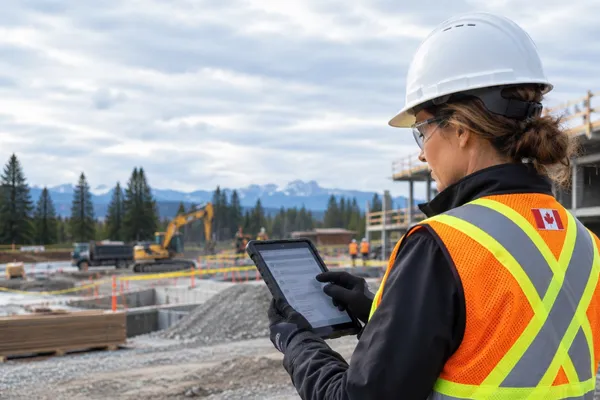
Yes. Digital safety software can allow workers to complete hazard assessments using a mobile device, tablet, or computer. Depending on the platform, it can also help businesses organize submissions and retrieve records more easily.
The process doesn't need to be complicated, but it does need to be meaningful. Whether your team uses paper forms or digital tools, the goal remains the same: make sure workers understand the hazards they face and have the controls they need before the work begins.
For businesses looking to simplify the documentation side of safety, FLOWforms makes it easier to bring safety forms into the digital workflow.
Click Here to Learn More about FLOWforms


